Keep remote areas in view.
Plan sensing points around forest access, terrain and environmental conditions, with a clear path for reviewing observations from the field.


SCOUT / FOREST MONITORING
A connected approach to forest monitoring. SCOUT brings environmental sensing, solar-supported field nodes and wireless communication together to help people recognise changes and plan their response.
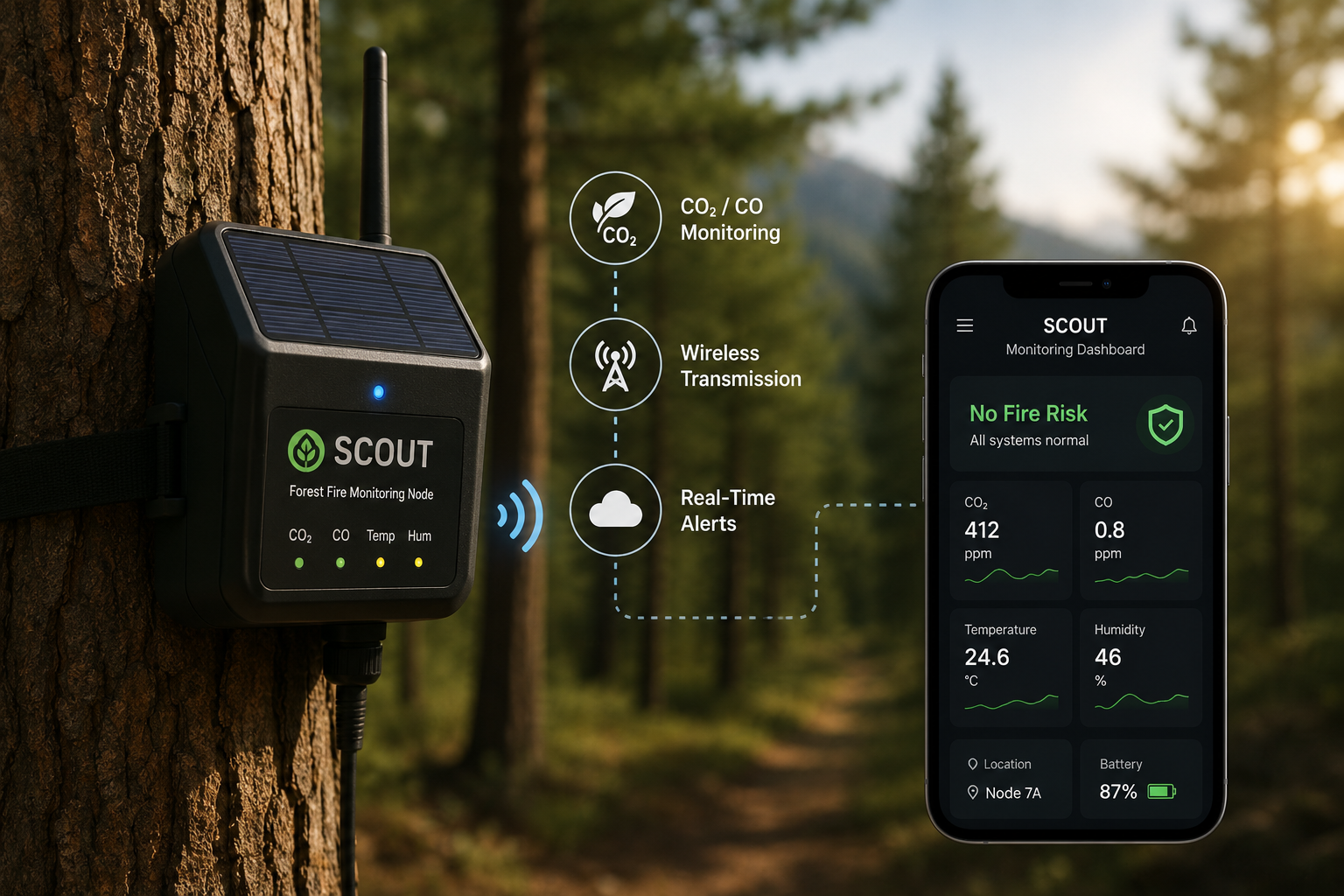
THE CONNECTED SYSTEM
Useful monitoring depends on the whole path: what is measured, how it reaches the team and what happens when something needs attention.
CO and CO2 readings and other environmental measurements provide context at selected monitoring points.
Solar-supported nodes send observations through a wireless network. LoRa-based links can form part of the design where coverage and terrain allow.
Monitoring software brings readings and node status together. Project-specific alert rules help direct attention to changes that need review.
The responsible team reviews the signal, checks local conditions and follows an agreed escalation and response plan.
An alert is a prompt for assessment. Environmental readings need context and verification; they do not, on their own, confirm a fire.
WHERE IT CAN HELP
The monitoring approach starts with the place and the people responsible for it.
Plan sensing points around forest access, terrain and environmental conditions, with a clear path for reviewing observations from the field.
Explore monitoring around managed woodland, visitor areas and access routes, aligned with the responsibilities of the people caring for them.
Consider environmental sensing along utility, transport or other infrastructure corridors, alongside site access and maintenance needs.
ENGINEERING AROUND THE PLACE
A useful system is more than a sensor on a tree. We consider the field environment, the communication path and the team receiving the information.
Talk through your requirementsConsider vegetation, local conditions, access and sensor positioning. Choose monitoring locations around the questions the system needs to help answer.
Assess sunlight, shading, energy demand and service access when planning solar support, batteries and maintenance intervals.
Review radio paths, gateway locations and backhaul options. Establish how the system should report a missing connection or unavailable node.
Agree who receives an alert, how it is checked and when it is escalated. Make responsibilities and follow-up clear before introducing monitoring.
LET’S UNDERSTAND YOUR LANDSCAPE
Tell us about the area you manage, the conditions you want to understand and the people who will act on the information.